


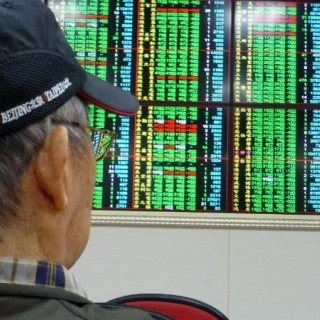
Asian stocks slipped at the open on Friday after risk sentiment faded on Wall Street, following news of bad debts at two US banks that heightened credit market concerns. US index futures also indicated further weakness. Japan, Australia, and South Korea all fell, in line with Wall Street's overnight slump: the S&P 500 fell 0.6% (financials -2.8%) and the Nasdaq 100 fell 0.4%.
Hedging assets rallied: gold and silver hit record highs, while Treasury yields continued to fall—the 2-year yield to its lowest level since 2022 and the 10-year below 4%. The dollar index weakened, heading for its worst week since late July. In the US regional banking sector, the sell-off continued after the impact of the collapse of subprime automotive lender Tricolor Holdings spread: Zions Bancorp plunged 13% after a $50 million charge-off related to a California Bank & Trust loan, and Western Alliance Bancorp fell 11% due to exposure to the same borrower.
Market concerns are mounting: the US government shutdown, the potential for an AI bubble, and US-China trade tensions. However, Steve Sosnick (Interactive Brokers) believes the current problems are still "isolated" to the two banks—not systemic. In Japan, Bank of Japan Governor Kazuo Ueda opened the door to an interest rate hike if confidence in the economic outlook strengthens; the yen extended its three-session rally. On trade, the White House is preparing to ease tariffs on the US auto industry. At the Fed, Christopher Waller supports a gradual 25-bps reduction, while Stephen Miran advocates for a larger cut by 2025. The September inflation release was delayed due to the shutdown, shifting the market's near-term focus to the earnings season. In geopolitics, Trump and Putin agreed to meet in Budapest; Oil prices fell to a five-month low on expectations of potentially looser Russian oil flows. (asd)
Source: Newsmaker.id
Tested EN...
Asian stock markets weakened for the second consecutive day, indicating that the initial rally that had been "speedy" at the start of the year is starting to lose steam. At the same time, US governmen...
US stocks were mixed on Wednesday as investors weighed uneven economic data against expectations for eventual Federal Reserve easing, with the S&P 500 easing 0.2% and the Dow Jones sliding 0.8% fr...
European stocks were in mixed territory on Wednesday morning, as regional market jitters grow over U.S. President Donald Trump's threat to annex Greenland. The pan-European Stoxx 600 was little chang...
Asian stock markets weakened slightly on Wednesday after posting their best start to the year in history. The decline was driven by a decline in Japanese stocks amid escalating tensions with China. Th...
Oil prices stabilized on Thursday (February 12th), as the market reassigned a risk premium to US-Iran tensions despite US inventory data showing swelling domestic supplies. This movement confirms one thing: geopolitical headlines are still more...
Gold prices weakened slightly on Thursday (February 12th), as more solid US employment data reduced market confidence in an imminent Federal Reserve interest rate cut. The strong employment data prompted market participants to shift expectations of...
The Hang Seng Index reversed its downward trend in Hong Kong on Thursday (February 12th), weakening by around 0.9% to around 27,000 after a strong session earlier. This decline halted the momentum of the short term rally, as investors began to...